
Wednesday
The Archers

The Twilight Zone
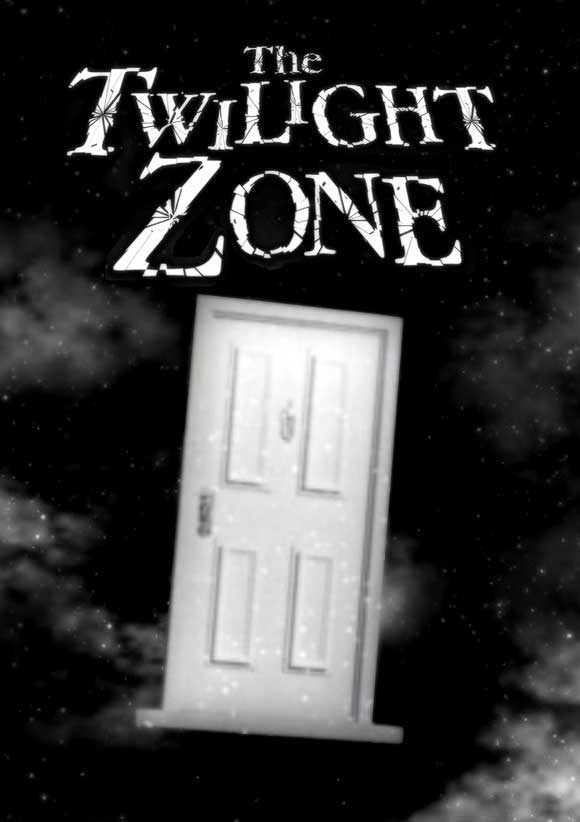
Honestly, I found it hard to analyse the episode at hand, after watching the original we could see how the producers struggled to create the same atmosphere and tone for the piece by not properly over compensating in the barriers of communication (removed visual from such a visually orientated narrative).
Through this they over compensated upon the script work, yet under-developed the characters; they had also over compensated on the sound effects to the point where it became comical (reference the officer pouring himself a cup of coffee, loudly, sipping it, loudly, then swallowing, very loudly) destroying all hopes of tension. This again happens with the background music, becoming loud enough that it becomes hard to listen to what is being said.
The character creation is very simple in this episode, the more authority the character has the deeper the american accents gets.
The History of Radio Drama

By the 1940's it had become the leading form of entertainment, releasing 50 new drama's a year (incl musicals, variety performances, comedians etc).
In WW2, the public feared going out and so they gained all their information and entertainment from the radio (incl. Winston Churchill's speech).
In 1951, over 300 radio dramas were produced a year.
Post war, radio stations changed their names to attract a steadier audience to shows such as 'Curtains up' (reaching 7.5 million listeners) and 'Saturday night theatre' (reaching 6.75 million listeners).
The first weekly serial dramas begun in 1946 with 'Dick Barton, Special Agent' by Edward J Mason. This was popular due to the post war spy craze that was occurring both on screen and radio. In the 1950's we saw the birth of 'The Goons' a very successful radio comedy that launched Spike Milligan and Peter Sellers into the limelight of the public eye, kick starting their careers.
As the famous Space Race began as did the trend for scifi to hit the scene, as seen with 'War of the Worlds'.
In the 1980's, radios became stereos and, with the added option of a left and right speaker, so evolved the use of sound. Radio dramas were able to have fading sounds and simultaneous sounds to create more complex aural scenery, as seen in 'The Hitchhiker's Guide to the Galaxy'.
In today's society however, radio dramas don't appear to be as popular with the younger audience as it once used to be, unless it comes to comedy shows such as Miranda and Little Britain. There is, however, 'The Archers' still running, conducting agricultural knowledge to the masses, and successfully being the longest running radio drama known to date.
Hitchhiker's guide to the galaxy

In vast contrast to 'War of the Worlds', HGTTG is very much based around comedic value and the tangibility of the imagination as opposed to destructive seriousness that forebodes the end of the world. HGGTG quite clearly and in a blasé manner destroys the Earth within the opening scenes.
From the classic folky "galactic" intro, the tone is set and we can tell that this series is going to be "terribly" British, from humour to accent to lexical choices. There is tea drinking, dire politeness and popping down the pub. How British can we get? With use of SFX in the opening scenes we can get the full extent of what it is to live in Britain, politely quite patrons in the pub and the polar opposites of life in space, bleepy, woopy, technology. In theme of Britishness, the humour is both dry, quick and highly satirical, 58p for six pints and the remedy to the world going to end? "Go and lie down, have a rest.", even the hitchhikers guide itself is drenched in satire.
Music is used softly in the back ground, rising and falling with tension or lack there of, whilst tension was used to represent the nothingness of space.
War Of The Worlds

The narrative of WotW presented itself in a very controversial way. Mimicking that of news broadcasting and also styles of evening entertainment shows, it perpetuated the false reality of the radio drama with such finesse that if you were to listen to it without knowing what you were listening to, you have presumed this was reality. A sad fact of truth for some towns in the bible belt of the US.
Welles had planned this radio drama with such precision to elude all ideas of the world outside of the piece, as that became the only thing you focus on. With the only form of immediate news-baring coming from radio, Welles engineered his drama with perfection to play on this; he even postponed breaking the verisimilitude by pausing for a break ten minutes later to aid his cause. This in turn helped cumulate the rising terror associated with this famous radio drama.
The radio drama itself is split into two parts, the first a vibrant and powerful piece of warped reality, with very little to prove otherwise, the second an obvious and lacking narrative that follows a characters journey into finding that the aliens have died from bacterial viruses. The second half appears both anti-climactic and highly lacking in comparison to the first, as the illusion is not only shattered but appears to have been entirely ignored.
Cultural Codes
Welles pays high attention to speech within his radio drama, right down to implementing false stuttering and faked false starts. This also includes attention to detail when covering regional accent and dialect, pitch and tension to alleviate empathic/synthetic stress, technical jargon from scientists and use of vocal bass to ensure the stereotype of authoritatian figures.
For example, the radio presenter adheres to this, his faint new york accent blanched over by American RP, this tentatively is played with a numbness and perpetual calmness to fear. His interviewed subject a simple New Yorker had a restricted vocabulary and slow pace of response.
Symbolic Codes
The Rhythm of this piece is key to the tension being built, in the beginning we have the illusion of an evening entertainment show broken into by "emergency broadcasts". These broadcasts break the tinny music (signature to live radio of that time), to allow a soft, monotonous, slow paced speech, only to return to the music that has been skipped forward somewhat to create the illusion of the pace moving faster than it actually was. Yet for the majority of the piece 'real time' is used to perpetuate the realism being created.
Technical Codes
This piece has been intricately woven with sound effects to maintain realism. The attention to detail is astounding, from the faint clock ticking in the background of the observatory to the interviewed New Yorker standing "accidentally" too far from the microphone. This not only aids in setting the scene and atmosphere but makes you feel like a fly on the wall to something that is "really going on".
Silence was more heavily used toward the end of this radio drama as a scene changer or time passer, yet it was also included in the first half to represent death, silence. Likewise with music, discounting the opening sequence of a variety show, it was mainly used in the second half to set the tone of the piece.
Radio Drama Review

The story focuses on Miranda (Miranda Hart), who after trading in her family inheritance to buy and co-run a joke shop with her best friend Stevie (Sarah Hadland), much to her mother's, Penny (Patricia Hodge), dissaproval, and her unfortunate luck with the man of her dreams, Gary (Tom Ellis). Also cast are Miranda's shrill and la-de-dah boarding school friend Tilly (Sally Phillips) and a slightly camp wannabe performing artist waiter at the restaurant Clive (James Holmes).
Miranda injects a fresh light hearted and much needed relief to radio comedy, that often recently has swayed more to satire or black humour, and reminds us of the origins of comedy, without smut, foul language and offensive humour. Her cheeky and playful attitude to comedy is clear and also refreshing; with her signature 'asides' to the audience, we see a novel attribute to the comedy of being unfortunate, what is going on inside the main characters head - think Bridget Jones minus the inner poise. The array of characters that inhabit Miranda's life are both larger than life caricatures but also that of atypical stereotypes. For example, Penny, Miranda's mother, is a middle class mother, one who prides herself on demure and the way the world perceives her, even if this pushes her to obsession with trying to marry off her daughter and lying about Miranda's day job.
I believe this show will appeal to a mass audience for the simple reason that the comedy is simple yet highly effective, what is going on is very easy to follow with the aid of sounds effects and the topics breached within the show are all of a simple class. Personally, I enjoyed the show due to the simplicity and highly ridiculous yet believable power of sods law to affect people at the worst times possible, combine that with an array of fantastically constructed associable characters, for myself, personally, Penny reminds me a lot of my own mother, to create a definite recipe for comedy gold for the masses.
What this show has taught me is to be wary of construction of the radio piece itself - for example, if comedy is to be contended with then as a creator I must be aware of timing and appeal-ability of punchlines and also that of setting the scene correctly through sound effects and script. Radio, especially when dealing with comedy, is a tricky business as the creator has to always bare in mind that the visual is not there. Such a statement sounds a relatively simple but yet we often tend to forget how much we rely upon visual aids (facial expressions, props and sets) to aid the atmosphere/tone of a piece and how much more thought will be needed to ensure the medium of radio does not jeopardise the piece.
Thursday
Welcome
Welcome to my Radio Production Log,
This Blog will include my ideas, the follow up research and the eventual work that will compile the radio drama that I will be creating for my coursework this year.
This Blog will include my ideas, the follow up research and the eventual work that will compile the radio drama that I will be creating for my coursework this year.
Subscribe to:
Posts (Atom)